Good morning, Franklin County. Remember when flying meant showing up 30 minutes before your flight with a paper ticket? Those quaint days are officially history at Columbus airports, where a record-breaking 9.2 million passengers rushed through terminals in 2023. That's like the entire population of New York City deciding to vacation in Central Ohio - and with a shiny new terminal on the way, we're clearly ready for our close-up.
Meanwhile, Columbus is proving you can honor the past while building for the future. As an 1860s church prepares for its encore as a CAPA music venue, an ambitious affordable housing project is taking shape nearby on Third Street. Though the housing development had to trim its original 12-story dreams, both projects are ready to transform their corners of downtown - assuming the paperwork gods smile upon their permit applications.
🌤 Sky Skoop | ||||||||||||||||||||||||||||||||||||||||||||||||||||||||||||||||||||||
|

 0%
0%☕️ What's Brewing Locally
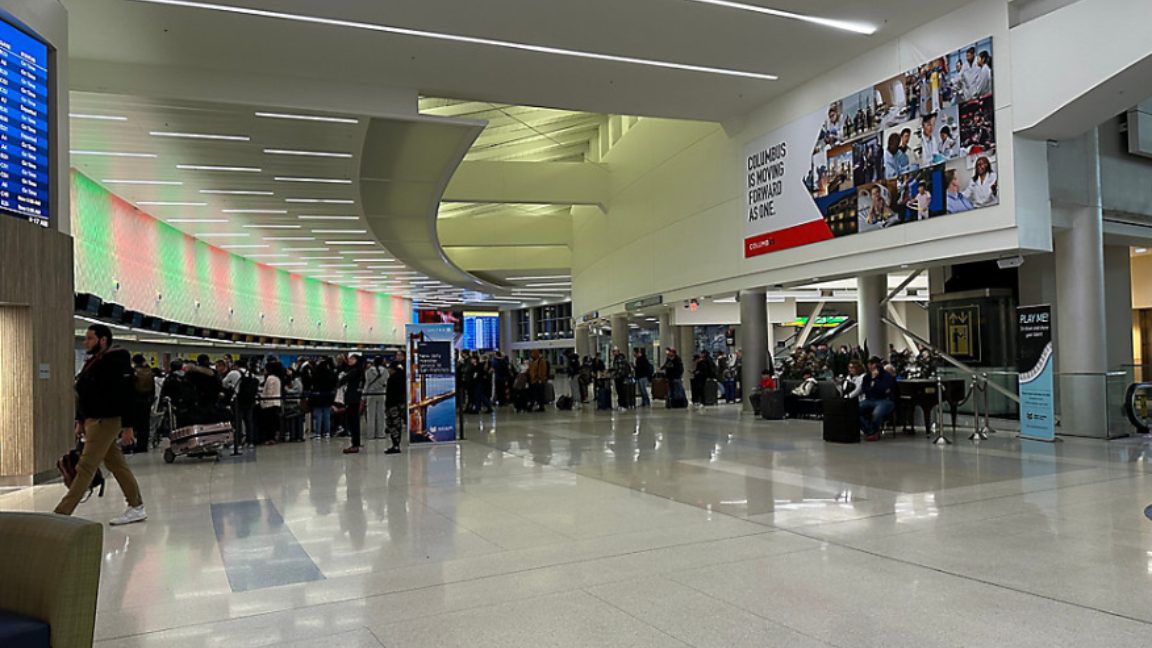
✈️ Columbus airports soar to record-breaking 9.2 million passengers in 2024. The impressive 6.7% increase over 2023's numbers included record highs in 10 different months throughout the year. Columbus Regional Airport Authority CEO Joseph Nardone celebrated the milestone alongside the groundbreaking of a new CMH terminal in December. The growth comes as the airports expand their nonstop destination offerings, marking a period of significant expansion for Ohio's capital city air travel.
🏛️ Historic church and affordable housing projects get green light in Columbus. The Downtown Commission approved plans to transform an 1860s church into a CAPA-operated music venue, complete with new additions and space for local artist murals. In the same meeting, they approved an 82-unit affordable housing development by the Columbus Metropolitan Housing Authority on Third Street. The housing project, called Aspire 360, was scaled down from its original 12-story design due to tax credit changes. Both projects aim to begin construction this year, pending permits and federal funding considerations.
🎨 Arts funding surge masks deeper problems in Columbus creative scene. Recent increases in arts funding have brought more grants and opportunities to Columbus, but the city's art sector remains trapped in capitalistic thinking. Local institutions prioritize marketing and development over genuine cultural investment, treating artists as convenient content providers. The scarcity mindset persists despite increased funding, with art spaces focusing more on fundraising than nurturing creativity. Artists continue sacrificing their vision for exposure, while venues treat art as background decoration rather than their core mission.